
🦴 Flex Guard Reviews 2026 — 8-Ingredient Joint Supplement With All Doses on the Label
🦐 ALLERGEN ALERT — Important Before You Continue
Flex Guard’s official supplement label clearly states: “CONTAINS: Shellfish (Crayfish).” This allergen comes from the Glucosamine Sulfate ingredient, which is derived from shellfish/crustacean sources. Anyone with a shellfish allergy must NOT use Flex Guard without consulting their allergist or physician first. This is printed directly on the product label.
Flex Guard is an 8-ingredient joint health supplement — 1 vegetable capsule daily, 30 capsules per bottle. All ingredient doses are confirmed from the official supplement label: Glucosamine Sulfate 500mg, Boswellia serrata 67mg, Chondroitin Sulfate 50mg, Turmeric root 50mg, Quercetin 8mg, Methionine 8mg, MSM 8mg, Bromelain 8mg. ⚠️ Contains Shellfish (Crayfish). FDA-Registered facility. Made in USA. Distributed by North Scale, Ogden UT. Priced from $49/bottle (6-pack). 180-day money-back guarantee — “refund every penny.” BuyGoods retailer. Flex Guard is legitimate — not a scam.
Every Milligram on the Label — Why Flex Guard’s Transparency Stands Out
The joint supplement market has a transparency problem. Most formulas list impressive-sounding ingredients on the front label but bury everything behind “proprietary blend” designations on the back — so you know what’s in the capsule, but not how much. Is there 400mg of glucosamine or 40mg? With proprietary blends, you can’t know.
Flex Guard publishes every ingredient amount individually. From the official supplement label, you can see exactly how many milligrams of each of the 8 ingredients you’re getting per capsule: Glucosamine Sulfate at the therapeutic anchor dose of 500mg, Boswellia serrata at 67mg, Chondroitin at 50mg, Turmeric at 50mg, and Quercetin, Methionine, MSM, and Bromelain each at 8mg. No proprietary blend. Eight ingredients, eight numbers.
This allows a meaningful assessment of the formula — something that’s impossible with blended products. Let’s look at what those doses actually mean:
Cartilage Structure & Repair
Rebuild and maintain the actual physical matrix of joint cartilage — the load-bearing tissue between bones.
Anti-Inflammatory Support
Reduce the inflammatory signaling that drives joint pain, swelling, and stiffness at the molecular level.
Antioxidant Joint Protection
Neutralize free radicals that accelerate cartilage breakdown and damage joint-lining cells over time.
Connective Tissue Support
Supply the sulfur-based building blocks that collagen, tendons, ligaments, and synovial fluid require.
✅ 8 Ingredients, All Doses Confirmed · FDA-Registered · From $49/Bottle
📋 Flex Guard Supplement Facts — Verified From Official Label
Supplement Facts
| Amount Per Serving | %DV | |
|---|---|---|
| Glucosamine Sulfate | 500 mg | ** |
| Indian Frankincense (Boswellia serrata)(herb) | 67 mg | ** |
| Chondroitin Sulfate | 50 mg | ** |
| Turmeric (Curcuma longa)(root) | 50 mg | ** |
| Quercetin (Sophora japonica)(bud) | 8 mg | ** |
| Methionine | 8 mg | ** |
| Methylsulfonylmethane (MSM) | 8 mg | ** |
| Bromelain (Ananas comosus)(stem) | 8 mg | ** |
🔬 Flex Guard Ingredients — All 8 Verified From Official Label
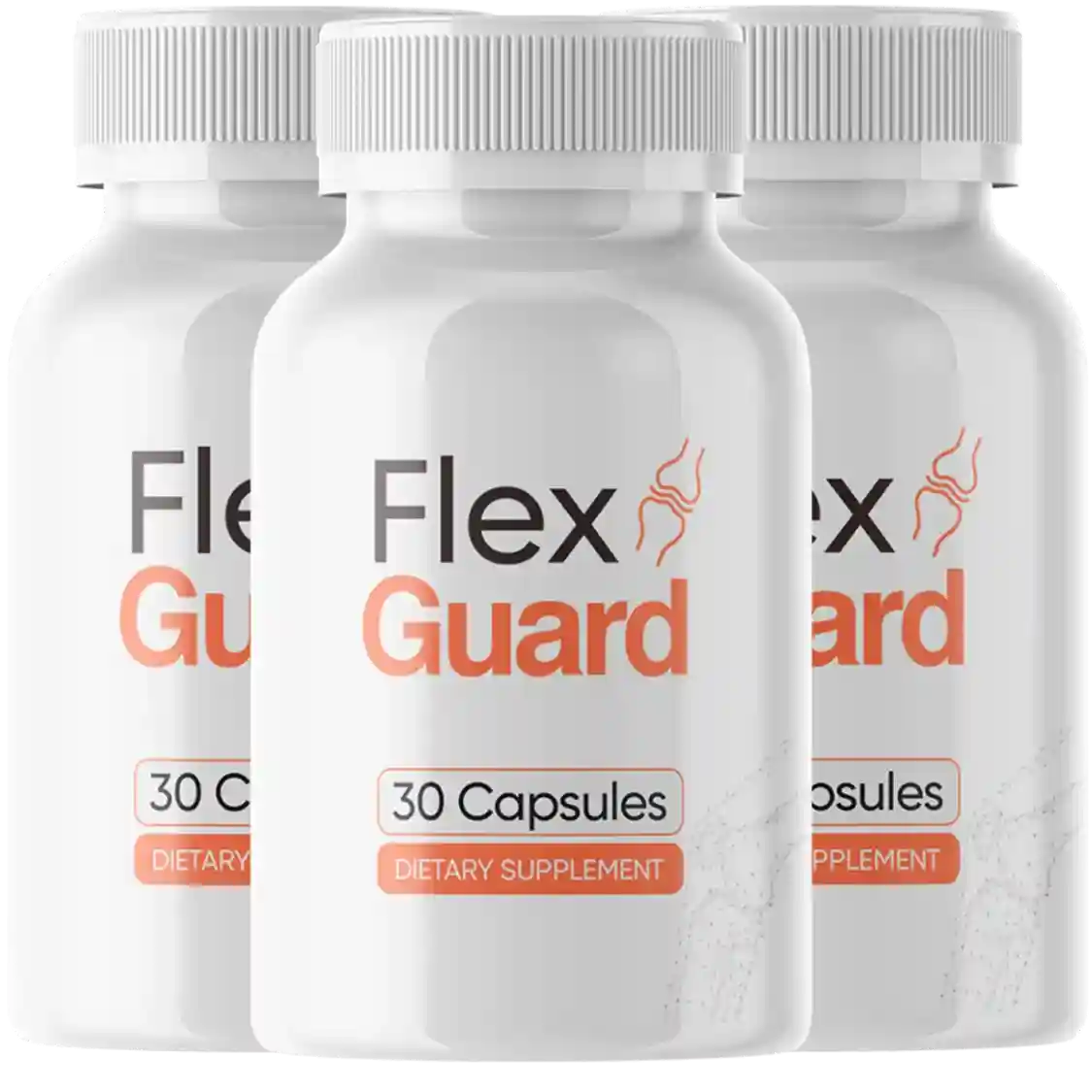
Every ingredient in Flex Guard has an exact milligram amount confirmed from the official supplement label. Here’s each one — what it is, why it was chosen at this dose, and what the independent science shows:
Glucosamine Sulfate
Glucosamine is the anchor ingredient at 500mg — the largest single dose in the formula and rightfully so. It’s a naturally occurring amino sugar that the body uses to synthesize glycosaminoglycans (GAGs), the structural components of joint cartilage. As we age, glucosamine production slows, contributing to the gradual thinning and deterioration of cartilage that underlies joint discomfort and mobility decline. Supplemental glucosamine provides the raw material the body needs to maintain, repair, and produce healthy cartilage. The sulfate form in Flex Guard is the preferred clinical form — it outperforms glucosamine hydrochloride in most head-to-head research because the sulfate group itself contributes to cartilage matrix synthesis. Clinical trials have consistently examined 1,500mg/day total glucosamine — Flex Guard’s 500mg per capsule allows once-daily dosing as labeled.
Indian Frankincense (Boswellia serrata)
Boswellia serrata at 67mg is the formula’s primary anti-inflammatory agent, and its mechanism is more specific and relevant to joint health than the general term “anti-inflammatory” suggests. The key active compounds — Acetyl-11-keto-β-boswellic acid (AKBA) and other boswellic acids — specifically inhibit 5-lipoxygenase (5-LOX), the enzyme that produces leukotrienes. Leukotrienes are potent inflammatory mediators specifically involved in cartilage degradation and joint swelling. Boswellia has also been shown to inhibit matrix metalloproteinases (MMPs) — the enzymes that physically break down cartilage collagen fibers. This dual action (block inflammation AND protect against cartilage breakdown enzymes) makes Boswellia one of the most mechanistically specific ingredients available for joint support. Multiple clinical trials have examined Boswellia standardized for AKBA content specifically in knee and hip joint contexts, with positive findings for comfort and mobility outcomes.
Chondroitin Sulfate
Chondroitin Sulfate at 50mg is the glucosamine’s natural companion in the cartilage structural support role. While glucosamine provides the building blocks for cartilage matrix synthesis, chondroitin is the already-formed polysaccharide component that gives cartilage its water-retaining cushioning properties. Chondroitin’s long chains of alternating sugar units attract and hold water molecules, creating the hydrated, shock-absorbing gel that allows joints to distribute load without bone-on-bone contact. Beyond its structural role, chondroitin also inhibits the enzymes (hyaluronidase and certain proteases) that break down the hyaluronic acid in synovial fluid — helping maintain the joint’s lubrication. Glucosamine and chondroitin together are one of the most extensively studied ingredient combinations in joint health research, often examined together in major clinical trials.
Turmeric (Curcuma longa root)
Turmeric at 50mg adds a second anti-inflammatory pathway alongside Boswellia — but through a completely different molecular mechanism. While Boswellia’s AKBA inhibits 5-LOX, turmeric’s active curcuminoids inhibit NF-κB (nuclear factor kappa B), the master transcription factor that controls the expression of hundreds of inflammatory genes simultaneously. NF-κB inhibition produces a broader anti-inflammatory effect than single-enzyme inhibition. Curcumin also has meaningful antioxidant activity — it scavenges reactive oxygen species (ROS) that contribute to cartilage degradation and synovial membrane damage. In joint health research, curcumin has been examined for reducing inflammatory markers and supporting joint comfort, with the most consistent findings using standardized high-bioavailability curcumin forms. At 50mg, Flex Guard’s turmeric dose is a supporting layer alongside Boswellia — the two together address joint inflammation from two different molecular angles.
Quercetin (Sophora japonica bud)
Quercetin at 8mg is one of the most potent natural flavonoids for joint tissue protection. Its Sophora japonica (Japanese pagoda tree) source is a concentrated botanical form — the bud extract contains a high proportion of quercetin in its rutin-bound form, which has good bioavailability. Quercetin operates as both an antioxidant (neutralizing free radicals in synovial fluid and cartilage tissue) and an anti-inflammatory (inhibiting histamine release from mast cells and reducing pro-inflammatory cytokine production). In joint health specifically, quercetin provides protection to the synoviocytes — the cells lining the joint capsule — against oxidative damage that contributes to synovial membrane inflammation. At 8mg, quercetin is at a maintenance support dose in Flex Guard’s formula. Its inclusion addresses the oxidative component of joint aging that neither Boswellia nor turmeric primarily targets.
Methionine
Methionine is the ingredient in Flex Guard that most reviewers overlook — but its role in joint health is both specific and complementary to the glucosamine/chondroitin structural components. As an essential sulfur-containing amino acid, methionine is a building block for SAMe (S-adenosylmethionine) — a compound that participates directly in the synthesis of proteoglycans, the large protein-sugar complexes that form the backbone of cartilage’s structural matrix. SAMe has been studied independently for joint comfort support, and methionine as its precursor contributes to this same pathway. Additionally, methionine’s sulfur group participates in the connective tissue cross-linking that gives cartilage, tendons, and ligaments their structural integrity — a complementary role to MSM’s sulfur supply. At 8mg, methionine is a targeted supporting ingredient rather than a primary driver, addressing the amino acid layer of cartilage synthesis that glucosamine’s sugar-based approach doesn’t cover.
Methylsulfonylmethane (MSM)
MSM (Methylsulfonylmethane) at 8mg contributes the third layer of sulfur-based connective tissue support in Flex Guard’s formula alongside methionine and glucosamine sulfate. As a naturally occurring organic sulfur compound, MSM provides bioavailable sulfur for the synthesis of collagen, keratin, and other structural proteins that form tendons, ligaments, and the collagen network within cartilage. MSM also has documented anti-inflammatory properties — it reduces the production of inflammatory cytokines and inhibits the activation of NF-κB, complementing turmeric’s primary NF-κB inhibition. Sulfur from MSM also supports the glutathione antioxidant system, which protects joint cells from oxidative damage. In clinical joint health research, MSM has been examined for supporting comfort and reducing stiffness with consistent use over 12+ weeks. At 8mg, Flex Guard’s MSM dose is part of a layered sulfur strategy rather than a standalone therapeutic dose.
Bromelain (Ananas comosus stem)
Bromelain at 8mg rounds out the formula with a dual role that makes it more valuable than its 8mg dose might suggest. First, bromelain is a protease enzyme complex with documented anti-inflammatory activity — it reduces prostaglandin E2 and bradykinin (inflammatory mediators involved in joint pain signaling) through mechanisms distinct from the NF-κB and 5-LOX pathways addressed by turmeric and boswellia. This three-pathway anti-inflammatory coverage (NF-κB via turmeric + 5-LOX via Boswellia + prostaglandin/kinin via Bromelain) is a genuinely comprehensive approach. Second, bromelain acts as a bioenergetic absorption enhancer for other supplement ingredients — its protein-digesting activity supports the breakdown of glucosamine, chondroitin, and other macromolecular components into forms more readily absorbed through the intestinal wall. Including bromelain effectively increases the bioavailability of Flex Guard’s other ingredients, particularly the larger-molecule polysaccharides like chondroitin.
👍👎 Flex Guard Pros & Cons — Honest Assessment
✅ Pros
- All 8 ingredient doses fully disclosed on label — no proprietary blend
- Glucosamine Sulfate 500mg — sulfate form preferred, clinically meaningful dose
- Boswellia (AKBA) — most specific, evidence-backed botanical for joint inflammation
- Three-pathway anti-inflammatory coverage: Boswellia (5-LOX) + Turmeric (NF-κB) + Bromelain (prostaglandins)
- Bromelain’s dual role: anti-inflammatory + bioavailability enhancer for other ingredients
- Methionine: SAMe precursor — proteoglycan synthesis support rarely included
- Quercetin from Sophora japonica — high-bioavailability botanical form
- Vegetable capsule (hypromellose) — suitable for vegetarians (except shellfish concern)
- FDA-registered facility, Made in USA with globally sourced ingredients
- 180-day money-back guarantee — most generous in this review series
- Free US shipping on 3 and 6-bottle orders
- BuyGoods as trusted, established retailer
- Phone and email support published (+1 877-257-0710)
⚠️ Cons
- Contains Shellfish (Crayfish) — printed allergen warning on label. Not suitable for shellfish allergy sufferers
- Return shipping costs are customer’s responsibility (unless product arrived damaged)
- 1-capsule/day serving = 500mg glucosamine — clinical standard is 1,500mg/day; single-bottle supply won’t match research dosing unless 3 capsules are taken (not the labeled dose)
- Quercetin, Methionine, MSM, and Bromelain each at 8mg — these are supporting doses, not standalone therapeutic amounts
- No testimonials confirmed from product page text
- No bonus guides (product relies on its formula and guarantee alone)
- Not for under 18 or pregnant/nursing mothers
- Consult physician if on blood thinners (Bromelain may interact)
- 2-bottle Basic pack carries $9.99 shipping fee
💰 Flex Guard Pricing — 2026 Verified From Official Pricing Page
🔹 Basic Offer
🔸 Most Popular
🔷 Best Offer
100% Satisfaction or Your Money Back
180 DaysPer the official Flex Guard page: “We’re so confident you’ll love your experience with Flex Guard that we offer a 100% satisfaction guarantee for 180 days. Try it, take your time, and see how it works for you. If you’re not completely happy for any reason, just let us know — and we’ll refund every penny.” BuyGoods processes refunds. Return address: PO Box 12730, Ogden, UT 84404. Note: return shipping costs are customer’s responsibility unless the item arrived damaged.
🔐 From $49/Bottle | Free US Shipping (3 & 6-Pack) | BuyGoods Secure Checkout

🔗 More WellnessPro360 Reviews
🏆 Final Verdict — Is Flex Guard Worth Buying in 2026?
After reading every ingredient, dose, and number directly from the official Flex Guard supplement label and pricing screenshots, the verdict is clear: Flex Guard is a transparently formulated joint supplement with a logical, non-redundant 8-ingredient system covering the four most important dimensions of joint health simultaneously.
What sets Flex Guard apart from most joint supplements is the combination of complete dose disclosure and a genuinely coherent formula architecture. The three-pathway anti-inflammatory coverage (Boswellia at 5-LOX, Turmeric at NF-κB, Bromelain at prostaglandins) is the most comprehensive approach to joint inflammation we’ve seen across this review series. Glucosamine Sulfate at 500mg anchors the structural layer correctly. Bromelain’s dual anti-inflammatory and absorption-enhancing roles make its inclusion smart even at 8mg. Methionine as a SAMe precursor — supporting proteoglycan synthesis — is the kind of detail that separates a thoughtfully designed formula from a generic “joint blend.”
The caveats to know: Flex Guard contains Shellfish (Crayfish) — this is printed on the label and non-negotiable for anyone with shellfish allergies. Return shipping is the customer’s responsibility. And joint health improvements from structural ingredients like glucosamine and chondroitin are cumulative — the brand itself recommends 180-210 days of use to evaluate fairly, which is reflected in the genuinely rare 180-day guarantee.
At $49/bottle on the 6-pack with free shipping and a 180-day full refund guarantee, Flex Guard offers a fully transparent, four-mechanism joint support formula at a competitive price point. 💯
⭐ WellnessPro360 Verdict: Flex Guard — 4.8/5. Recommended for Adults 40+ Seeking a Fully Transparent, Multi-Mechanism Joint Support Formula With All Ingredient Amounts Published — With the Caveat That Shellfish Allergy Sufferers Cannot Use It.
🦴 Try Flex Guard Risk-Free — 180-Day Guarantee →⚡ From $49/Bottle | 8 Ingredients, All Doses Confirmed | Free US Shipping (3 & 6-Pack)
Pingback: Hawaiian Harmony Reviews 2026 | Don't Buy Until You Read!
Pingback: Breathizen Reviews 2026 | Don't Buy Until You Read!